




Epigenetics in Skincare: How Science Helps Skin Work Better Naturally
Epigenetics is one of the most talked-about topics in modern science — but also one of the most misunderstood. The word sounds complex, yet the idea behind it is actually quite simple.
Our DNA contains the instructions for how our body works. You can think of it as a huge instruction manual. But having instructions alone is not enough. What really matters is which instructions are being used, when they are activated, and how the body reads them.
This is where epigenetics comes in.
Epigenetics is the science that studies how genes are switched “on” or “off.” Some genes become active, others stay silent, depending on the signals the body receives. In other words, epigenetics controls how our cells behave.
This is also why humans share most of their DNA with many other living beings, yet look and function completely differently. The difference is not only in the DNA itself, but in how it is read and expressed.
In medicine, epigenetics has been studied for years. In cosmetics, however, it represents a major innovation.
Traditional skincare often focuses on stimulating the skin from the outside — for example encouraging fibroblasts to produce more collagen or hyaluronic acid. Epigenetic skincare works differently. Instead of only stimulating the final result, it acts “upstream,” helping the skin reactivate the natural biological processes that become slower with age.
Two Examples of Epigenetic Skincare
NONAPEPTIDE-1
This ingredient works in harmony with the skin’s natural circadian rhythm — the biological clock that regulates day and night functions. It helps activate proteins normally active in the early morning, when skin cells “wake up” and restart their daily metabolism.
TRIPEPTIDE-32
This patented peptide works mainly at night, when the skin naturally repairs itself. It supports collagen and elastin production and helps strengthen overnight regeneration processes that gradually slow down over time.
What makes epigenetics so interesting in skincare is that it doesn’t simply “add” something artificial to the skin. Instead, it helps remind the skin how to perform its own functions more efficiently.
In short, epigenetic cosmetics aim to help the skin recover its natural balance, rhythm, and vitality — working at the deepest biological level rather than only on the surface.
Advanced Protection Against the Exposomes
Every day, our skin is exposed to external aggressors: pollution, UV rays, blue light from screens, oxidative stress, and even imbalances in the skin microbiome. Together, all these factors are called the exposome.
Most traditional skincare products try to protect the skin by creating an external barrier using ingredients like hyaluronic acid, filters, or protective polymers. While this approach can help, it only protects the surface.
Modern skincare is evolving toward a more advanced idea: instead of only shielding the skin, we help the skin defend itself.
This is what advanced exposome protection means — strengthening the skin’s own natural ability to resist stress, repair damage, and stay healthy.
Key Active Ingredients
SCLAREOLIDE
Derived from Salvia sclarea, this ingredient has been widely studied for its protective properties. It helps defend the skin against pollution, oxidative stress, and blue light exposure, while also supporting the balance of the skin microbiome.
What makes it particularly interesting is the amount of scientific research behind it: more than 90 pages of studies and testing support its effectiveness. This is not simply a trendy ingredient, but one backed by substantial evidence.
Acetyl Tetrapeptide-5
Designed specifically for the delicate eye contour area, this peptide helps strengthen fragile tissues, improve microcirculation, reduce puffiness and dark circles, and provide antioxidant and moisturizing benefits.
Instead of relying on heavy textures that merely coat the skin, this approach combines lightweight, comfortable formulas with ingredients designed to work deeper within the tissue.
The result is a smarter form of protection: not just covering the skin, but helping it become stronger, more resilient, and better able to protect itself every day.
Ginseng Exosomes: Real Science, Not Marketing Hype
In recent years, exosomes have become one of the biggest trends in cosmetics. The term is now everywhere — but unfortunately, not all products using the word are based on real science.
Exosomes are tiny vesicles naturally produced by cells. They carry biologically active substances such as peptides, lipids, and messenger molecules that help cells communicate with each other.
Many plant extracts technically contain exosomes. However, the important difference is not simply their presence — it is the quantity, quality, stability, and ability to isolate them in an active form.
A useful comparison is gold in the earth: traces of gold can be found almost everywhere, but that does not mean every piece of soil contains a meaningful amount. The same applies to exosomes. Claiming they are present is not enough; they must be measurable, stable, and functional.
This is why scientific validation matters. To officially use the term “Extracellular Vesicles” in cosmetic ingredients, companies must provide solid evidence such as electron microscopy images, stability testing, and quantitative analysis.
For this reason, selecting the right supplier becomes extremely important. After evaluating many options, ginseng exosomes were chosen because of their quality and scientific reliability.
Why Ginseng?
Ginseng has been used for centuries in traditional Chinese medicine and has long been valued for its adaptogenic properties — meaning its ability to help the body better adapt to stress.
In skincare, ginseng exosomes help support the skin’s natural defenses, improve resistance to oxidative stress, and help prevent visible signs of premature aging.
The real innovation here is not marketing hype, but the evolution from simple plant extracts toward highly advanced, measurable, and biologically functional ingredients.
EGF: Epidermal Growth Factor
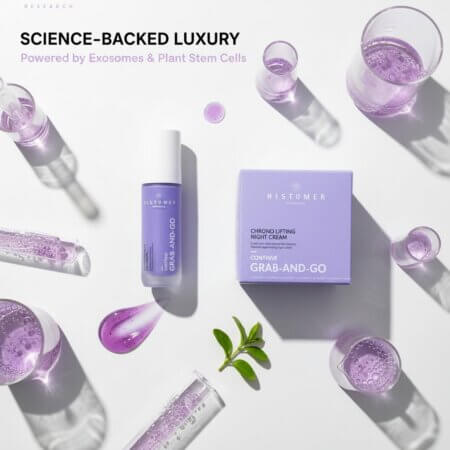
The fourth pillar of the ContinVe line is based on Epidermal Growth Factors, commonly known as EGF.
To understand why they are so important, it helps to look briefly at their scientific origins. In the 1980s, researchers discovered that the saliva of certain animals contained substances capable of accelerating growth and tissue development. Young animals exposed to these substances developed teeth, hair, and vital functions faster than normal. These substances were identified as growth factors — natural molecules that send signals to cells, stimulating regeneration and tissue repair.
Scientists later discovered that different growth factors target different tissues: some support bones, others muscles, nerves, or skin.
Two researchers, Stanley Cohen and Rita Levi-Montalcini, were awarded the Nobel Prize for their groundbreaking work on Nerve Growth Factor (NGF), proving that even nerve tissue could regenerate in response to these biological signals.
Further research led to the discovery of Epidermal Growth Factors (EGF), molecules specifically involved in skin renewal.
Our skin naturally renews itself through a continuous cycle. New cells are produced in the deepest layer of the epidermis, then gradually move upward until they reach the surface and are naturally shed. This process normally takes around 28 days and is regulated by growth factors like EGF.
As we age, however, the production and activity of these growth factors decrease. Skin renewal becomes slower, and the skin gradually loses vitality, brightness, firmness, and elasticity.
For this reason, the ContinVe line includes five different types of EGF, each designed to support a specific biological function. Some stimulate cell renewal, others encourage the production of elastic fibers, while others help improve microcirculation and the delivery of oxygen and nutrients to the skin.
All these ingredients carry the prefix “SH,” which stands for Synthetic Human. This means they are laboratory-produced molecules that are biologically identical to those naturally found in the human body, making them highly compatible and effective.
The goal of this technology is not simply to improve the appearance of the skin temporarily, but to support the skin’s own natural regeneration mechanisms. The result is skin that appears more vital, stronger, smoother, and more youthful over time.
Neurocosmetics: Beyond Sensory Skincare
Neurocosmetics is one of the most innovative areas of modern skincare, but it is often misunderstood.
For many years, the term was mainly associated with relaxing treatments, pleasant fragrances, or massage rituals that create a feeling of comfort and well-being. While these experiences certainly help us relax, they represent only the surface of what neurocosmetics really means.
Today, scientific research shows that the skin is much more than a protective barrier. It is an intelligent sensory organ filled with receptors capable of detecting touch, temperature, environmental stress, and chemical signals. Through these receptors, the skin constantly communicates with the nervous system.
This interaction can influence not only the skin itself, but also our emotional and physical well-being. One example is the release of endorphins — the “feel-good” molecules naturally produced during exercise, relaxation, or physical contact.
Starting from this scientific understanding, researchers began exploring whether these neurosensory mechanisms could also help reduce visible signs of aging.
Facial expressions cause the muscles of the face to contract thousands of times over the years. These repeated micro-contractions gradually contribute to the formation of expression lines and wrinkles. While this is a completely natural process, modern cosmetic science can help soften and modulate these effects.
Back in 2001, Histomer Professional introduced an innovative product called Botumimic, based on a peptide called Acetyl Hexapeptide-8, now widely known as Argireline.
Argireline quickly became one of the world’s most recognized anti-aging peptides because of its “botox-like” action. Without blocking facial movement like botulinum toxin, it helps reduce the intensity of micro-contractions responsible for expression wrinkles.
Today, an even more advanced version exists: Argireline Amplified. This upgraded form offers greater stability and improved bioavailability, allowing the ingredient to work more effectively within the skin.
ContinVe uses this enhanced version to provide more precise and powerful support against expression lines.
But the innovation goes further.
The formula also includes SH-Pentapeptide-5, a peptide designed to stimulate the skin’s own production of endorphins. This creates a sense of relaxation directly within the skin itself, helping reduce visible tension and supporting a smoother appearance.
The result is a dual-action approach:
- reducing the repetitive micro-contractions linked to wrinkles
- promoting deep skin relaxation through natural endorphin stimulation
This modern evolution of neurocosmetics is what we call “Botumimic 2.0” — an advanced combination of neuroscience and skincare designed to support smoother, more relaxed, and younger-looking skin.
Micropulse Technology
Another important innovation in the ContinVe line is Micropulse Technology.
The inspiration comes from advanced skincare devices widely used in Asia, especially in Korea, where beauty treatments often combine cosmetics with technology-based facial tools.
Many of these devices use metal rollers or spheres that generate gentle microcurrents when applied to the skin. These microcurrents help stimulate the tissues and encourage the production of elastic fibers, almost like a workout for the skin.
The challenge, however, is practicality. To see visible results, these devices usually require daily sessions lasting 20 to 30 minutes — a routine that can be difficult to maintain consistently.
Researchers therefore studied the biological mechanism behind these treatments and discovered that the electrical stimulation activates specific proteins involved in the production of elastic fibers.
This led to an important breakthrough: could the same biological signal be recreated without using a device?
The answer came through Tetrapeptide-1, a peptide capable of mimicking the same stimulation produced by microcurrents. In other words, it helps activate similar regenerative processes directly through skincare.
To evaluate its effectiveness, researchers conducted a simple but very revealing test. Neurocosmetics is one of the most innovative areas of modern skincare, but it is often misunderstood.
The results showed comparable improvements in skin firmness, elasticity, and tone on both sides of the face.
This discovery led to the creation of Micropulse Technology — an advanced cosmetic approach designed to deliver benefits similar to professional beauty devices, but in the convenience of a skincare formula.
For this reason, Micropulse Technology has been included exclusively in the Formula products of the ContinVe line, offering a highly innovative approach to improving skin firmness, elasticity, and overall skin vitality.
Watch the Professional ContinVe Treatment here.